
Shelton Chapter 7 Bankruptcy Lawyer
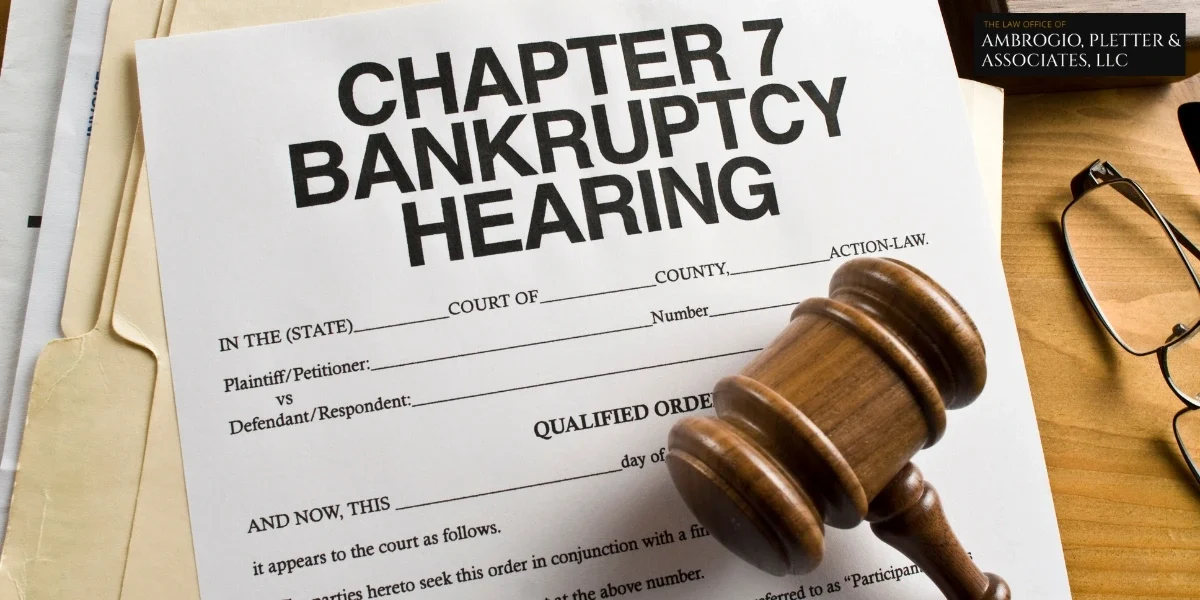
Shelton Chapter 7 Bankruptcy Attorney
Chapter 7 bankruptcy allows individuals to eliminate specific types of debt, providing a practical solution for anyone facing overwhelming debts and an inability to continue paying those debts. Chapter 7 bankruptcy may be suitable for individuals who are struggling with high credit card debt, outstanding judgments, consolidation loans, car repossessions, hospital and medical debt or even SBA loans from your business.
If you are struggling to pay your debts, speaking to Tim Pletter, a Shelton Chapter 7 Bankruptcy lawyer, will allow you to learn your options so that you no longer feel trapped by your creditors and debt collectors.
When you find yourself considering filing for Chapter 7 bankruptcy, the team at Ambrogio, Pletter & Associates, LLC is here to help. We understand how difficult and overwhelming filing for bankruptcy can be, and we want to support you and your family during this challenging time.
We will keep you informed about your case every step of the way and ensure your questions are answered. All clients have direct access to speak to Attorney Tim Pletter through phone or email.
With our team on your side, we will help restore your financial health and peace of mind.
Contact Our Stratford
Bankruptcy Attorneys Today
To learn more about the benefits of bankruptcy and loan modifications
Qualifying for Chapter 7 Bankruptcy
In order to qualify for relief under Chapter 7 of the Bankruptcy Code, individuals either must pass the means test to demonstrate eligibility or show that their debt is primarily non-consumer in nature. Non consumer debt is often business related debt.
When working with the team at Ambrogio, Pletter & Associates, LLC, our Shelton Chapter 7 Bankruptcy Lawyer will help you determine if you pass the means test or if your type of debt is non-consumer so that no means test analysis in required.
When we analyze your means test, we look at your income over the prior 6 months, your monthly expenses, your debts, and the size of your household. Your household may include partners, step children or your parents. If you help to support other members of your family such as parents, that may help you pass the means test.
We compare your income over the prior 6 months to the median income in the State in which we live, Connecticut. Attorney Pletter will help you determine if your income is above or below the median income. If you are under the median income, you probably pass the means test.
However, if your income is more than the median income of the state, there are still ways in which you can pass the means test. We do this by carefully reviewing your monthly expenses. At Ambrogio, Pletter & Associates, LLC, our Shelton Chapter 7 Bankruptcy Lawyer can help you better understand the means test and we will work with you and make suggestions to help you eventually pass the means test.
The reason clients choose Chapter 7 bankruptcy is to obtain a discharge. A discharge is a court order that tells the creditors that the debt that you owed to them has been eliminated. This debt elimination is permanent. It is illegal for a creditor to sue you in court, or call you on the phone, or email you, or text you, or for that matter have any contact with you in an attempt to collect the debt once the debt has been discharged.
If, for example, a credit card company, or a hospital, or an old landlord has already sued you and obtained a judgment, a bankruptcy discharge eliminates that judgment. Certain types of debts may not be eligible for discharge.
We will first help you determine what your debts are and whether those debts can be discharged. This is one of many reasons why speaking with Tim Pletter, a Shelton Chapter 7 bankruptcy attorney, is critical when you are at risk of falling behind with your debt payments.
How Chapter 7 Bankruptcy Works
Your Chapter 7 bankruptcy case begins when you file your petition. This is designed to be a quick and smooth process that allows you to eliminate your debts in a short period of time, usually 3 months. Your debts might include items such as credit card debt, old tax debt, hospital and medical debt, an SBA loan, or any other form of financial debt. Chapter 7 bankruptcy does not include a repayment plan, meaning your debts are discharged, not repaid and not reorganized.
In addition to the petition, you must also file a schedule of your assets and liabilities, a schedule of your current income and expenditures, a statement of your financial affairs, and a schedule of all unexpired leases or executory contracts. Our team at Ambrogio, Pletter & Associates, LLC in Shelton, CT will prepare all of these schedules for you.
You must provide us with several documents such as a copy of your recent tax returns, paystubs, bank statements, and credit reports. Several of these documents must be sent to the trustee, who is a lawyer who works for the federal government and reviews your bankruptcy paperwork and your financial documents.
After your bankruptcy petition is filed, you will have to attend a hearing where you answer simple questions regarding your financial information. This hearing is commonly referred to as a 341 meeting. Our Shelton Chapter 7 Bankruptcy Lawyer will prepare you for this hearing and tell you all of the questions that will be asked so that you are prepared to answer them.
For decades, these hearings were held in person in the federal building in New Haven and Hartford, however, after the pandemic, these hearings are held over Zoom. Most clients come to our Main Street office to do the Zoom hearing in the same room as Attorney Tim Pletter, but some clients prefer to log into the zoom hearing from their home or car. Completing a bankruptcy hearing is much more convenient now that the hearings are done remotely.
How Long Does Chapter 7 Bankruptcy Take in Shelton?
Most Chapter 7 bankruptcy cases take roughly three to four months from the time of filing to the discharge of eligible debts. However, the timeline can vary depending on your financial circumstances, the accuracy of your documents, and whether the bankruptcy trustee needs additional information.
Before filing, Attorney Tim Pletter will review your income, debts, assets, and financial records to determine whether you qualify for Chapter 7. You must also complete an approved credit counseling course. Once your petition is filed, an automatic stay generally stops most creditor collection activities.
Approximately 21 to 40 days after filing, you will attend a meeting of creditors, which is known as a 341 meeting. These meetings are generally conducted virtually via Zoom, and Attorney Tim Pletter will prepare you for the trustee’s questions.
Incomplete financial records, undisclosed assets, creditor objections, or complicated business interests can delay your case. Although many people receive their discharge within four months, cases involving nonexempt property may remain open longer while the trustee completes the administration of the bankruptcy estate.
What Property Can You Keep Under Chapter 7 Bankruptcy in Connecticut?
Filing for Chapter 7 bankruptcy does not necessarily mean losing your home, vehicle, or personal belongings. Connecticut’s bankruptcy exemptions protect certain property from being sold by the bankruptcy trustee to repay creditors.
Under Connecticut General Statutes § 52-352b, protected property may include:
- Your home: Up to $250,000 in equity per owner in your primary residence under the state’s general homestead exemption.
- Motor vehicles: Up to $7,000 in combined equity in two vehicles.
- Household belongings: Necessary clothing, furniture, bedding, and appliances.
- Retirement savings: Qualifying retirement accounts and pension benefits.
- Other property: Certain work tools, public benefits, and personal belongings.
It is important to remember that not every asset is automatically protected. The exemptions available to you may be case-specific, depending on your circumstances and applicable limits. Attorney Tim Pletter will review your assets, explain available exemptions, and help you understand what property you may be able to keep before filing your Chapter 7 bankruptcy petition.
What Debts Cannot Be Discharged Under Chapter 7 Bankruptcy?
Although Chapter 7 bankruptcy can eliminate many unsecured debts, certain debts generally cannot be discharged. Understanding these exceptions is important when deciding whether bankruptcy is the right option for your situation.
Debts that may remain after Chapter 7 include:
- Child support and alimony: Domestic support obligations are court-ordered and generally cannot be discharged.
- Student loans: Most federal and private student loans require a separate showing of undue hardship to qualify for discharge.
- Recent income taxes: Certain tax debts would likely remain enforceable by the IRS.
- Criminal fines and restitution: Court-ordered criminal penalties generally cannot be erased through bankruptcy proceedings.
- Debts tied to fraud: Debts that resulted from fraud may be excluded from discharge when successfully challenged.
Property liens may also be exempt from discharge through bankruptcy proceedings. Attorney Tim Pletter will review your outstanding debts before explaining what may or may not qualify for discharge, so you understand your financial responsibilities after bankruptcy.
Why Hire a Chapter 7 Bankruptcy Lawyer in Shelton?
Whether you live in Huntington, White Hills, or the Booth Hill area, choosing to hire a Chapter 7 bankruptcy lawyer can help you understand your options and avoid costly mistakes. Attorney Tim Pletter, an experienced Shelton Chapter 7 bankruptcy attorney, will review your income, assets, and debts to determine whether Chapter 7 is appropriate for your financial situation.
Our legal team will explain applicable Chapter 7 bankruptcy laws, identify exemptions that may protect your home, vehicle, and other property, and prepare the documents required for your bankruptcy petition. We will also review potential complications involving business ownership, personal guarantees, and outstanding tax debts.
Throughout your Chapter 7 bankruptcy case, Attorney Tim Pletter will explain what to expect, prepare you for the meeting of creditors, and address questions raised by the bankruptcy trustee. Our goal is to help you pursue a fresh financial start with confidence.
FAQs About Shelton, CT Chapter 7 Bankruptcy Laws
Q: How Much Does It Cost to File Chapter 7 in CT?
A: Attorney Tim Pletter offers free consultations and typically provides a flat-fee quote based on your case’s complexity, assets, income, business interests, and debts. The court filing fee is currently $338. You must also complete two required financial education courses, generally costing $12–$25 each. Creditor objections or other complications may result in additional attorney fees. During your consultation, Attorney Tim Pletter will explain anticipated costs and available payment arrangements.
Q: What Are the Benefits of Filing Chapter 7 Bankruptcy?
A: There can be several benefits to filing for Chapter 7 bankruptcy in Connecticut. These benefits can include being able to start fresh by receiving a Discharge of Debtor. Our team will review which debts can be discharged and which cannot.
The process itself typically takes only three to four months from filing to discharge. Filing can also provide immediate relief from most creditor collection activities through the automatic stay.
Q: How Do I Know If Chapter 7 Is Right for Me?
A: In Connecticut, Chapter 7 bankruptcy might be right for you based on your household income, the types of debt you owe, and the value of your assets. Meeting with an attorney can help you determine which form of bankruptcy is correct for you. Attorney Tim Pletter will review your financial situation, explain the differences between Chapter 7 and Chapter 13, and help you understand your options for addressing overwhelming debt.
Q: How Can I Complete a Bankruptcy Petition?
A: We will provide a checklist of required documents, including pay stubs, bank statements, tax returns, and credit reports. Once you submit these records, our team will prepare your bankruptcy petition, statement of financial affairs, and schedules of assets and liabilities.
We will also compile detailed information about your creditors and their claims, income sources and amounts, property ownership, and monthly living expenses. Our goal is to ensure your bankruptcy documents are accurate and complete before filing.
Speak With a Trusted Chapter 7 Bankruptcy Lawyer Today
For assistance on all matters regarding bankruptcy in Connecticut, the team at Ambrogio, Pletter & Associates, LLC is here. You can trust us to review the details of your bankruptcy case and closely work with you throughout the entire process. Contact our offices today to schedule a consultation and allow us to help you.
Take Action Today & Begin Moving Forward
Attorney Tim Pletter works directly with his clients, and most of your contact will be directly with him. Please contact our Stratford, Connecticut, office today to arrange your free consultation

© 2026 Ambrogio, Pletter & Associates, LLC • All rights reserved.
Digital Marketing By: 
*Images are obtained under license from Canva and other third-party stock image providers, with attribution included where required.