
Is It Possible To Remove Your Name From A Mortgage in Connecticut?
Is it possible to remove your name from a mortgage in Connecticut? Taking your name off of a mortgage is a question countless residents ask following significant life changes such as separation, divorce, or the sale of jointly owned property. The answer depends on countless financial and legal factors associated with the loan itself, not just the property. Mortgage agreements are enforceable contracts, and altering who is legally responsible is rarely simple.
Choose Ambrogio, Pletter & Associates, LLC: Work With a Mortgage Lawyer You Can Trust
Working with an experienced mortgage attorney can help clarify whether removal is possible based on your situation and what legal requirements are necessary under state and federal mortgage laws. Attorney Tim Pletter and the team at Ambrogio, Pletter & Associates, LLC, have spent years helping Connecticut residents navigate complex financial situations and are prepared to use their knowledge, skills, and resources to help you craft an effective resolution to your case.
Removing Your Name From a Mortgage in Connecticut: How Does It Work?
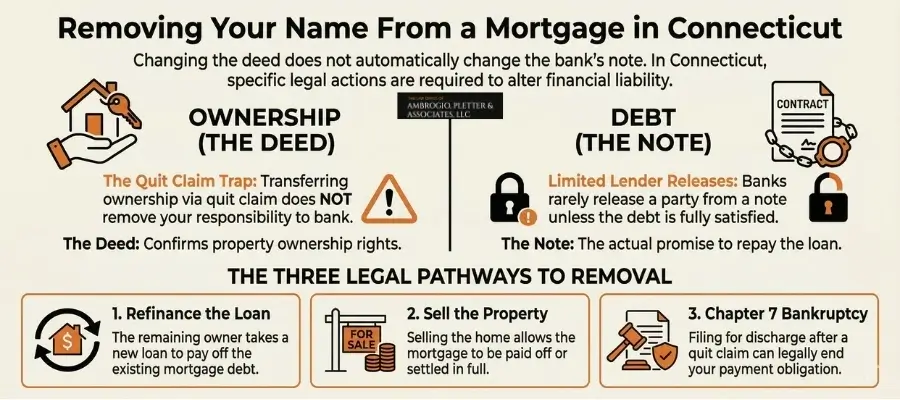
Many homeowners believe that changing ownership of a home also eliminates financial responsibility for the mortgage. In actuality, the deed and mortgage are different legal documents. Removing your name from a mortgage in Connecticut means you are no longer legally required to repay the loan. This is different from taking your name off the property title, which only impacts ownership rights. A mortgage lawyer can help you understand the difference.
When two or more people buy a home together, they will all be named as owners on the deed. If they borrow money to buy the home, they will all sign the mortgage. A mortgage gives the bank an interest in the home as collateral for the loan. The mortgage alone does not create a debt. In 2023, there were nearly 28,000 filed mortgage complaints. Although all of the people who are named on the deed must sign the mortgage, they do not all have to sign the note.
The note is the document that states the terms of the loan. The note is the promise to pay the money back. It is possible to be one of the home buyers named on the deed, but not be one of the borrowers listed on the note. The note is the document that determines if the mortgage will be reported on a homeowner’s credit report.
Sometimes things don’t work out between co-owners.
Clients ask me, “Can I take my name off the mortgage?”
It is helpful to review the clients’ closing papers. First I must know who is on the deed. The deed tells me who owns the property. In 2024, over 40% of owner-occupied homes with a mortgage in the United States are jointly mortgaged.
It is possible to quit claim deed the property from one owner to the other. However, this will change the ownership of the property, it will not affect the debt to the bank. In other words, a quitclaim deed will not remove a co-owner from the note. If both parties signed the note, then the best way to remove one owner from the note is for the other owner to refinance. When one owner refinances, they take a new loan to pay off the old loan.
Once the old mortgage is paid off, then one of the owners has successfully removed themselves from the note. Unfortunately it is not always possible for one of the owners to refinance. When property values go down, there may not be enough equity to refinance.
Sometimes an owner’s credit score is too low to refinance. If refinancing is not an option, then selling the property and paying off the mortgage may be the optimal solution. If the property’s value is less than the mortgage debt owed, selling might require a short sale, meaning a mortgage company could settle for less than a full payoff. A short sale is not good for either borrowers’ credit report. There can also be income tax consequences. In some short sales, debt is not forgiven and borrowers can be sued after the sale is completed.
Mortgage companies generally do not release one party from the note under any circumstances, unless one party files bankruptcy.
A loan modification can reduce the monthly mortgage payment. If one owner leaves and quit claims their interest to the other owner, such as in a divorce, the loan modification may be based on the remaining owner’s income. However, the mortgage will continue to be reported on both parties’ credit reports. One solution to this ongoing obligation is for the party who wishes to be removed from the mortgage, to file a Chapter 7 bankruptcy.
If a co-owner quit claims the property and receives a Chapter 7 discharge, then they will have no ownership in the home and no obligation on the mortgage.
Their name will still be written on the mortgage document, but it will have no further effect.
FAQs
How Do You Get Your Name Taken Off of a Mortgage in Connecticut?
Typically, your name can only be removed from a mortgage if the loan is fully paid off, refinanced, or assumed by another qualified, lender-approved borrower. Simply shifting property ownership does not eliminate the entire responsibility of the mortgage. The dynamic landscape of such situations usually calls for skilled legal guidance to make certain that you adhere to all legal requirements and find the most effective resolution for your scenario.
How Much Does It Cost to Remove a Name From a Mortgage in Connecticut?
The cost of removing a name from a mortgage can vary depending on the method. Refinancing can involve costs of closing, fees for appraisal, and lender charges. Paying the loan off rids the possibility of future expenses but requires adequate funds to satisfy the debt. Every case and situation is different with unique challenges, which is why legal counsel can be a major difference-maker.
Does Removing Your Name From a Mortgage Hurt Your Credit?
When carried out properly, the removal itself does not affect your credit. With that said, delays during payoff or refinancing or missed payments can negatively impact your credit history. An experienced mortgage attorney from our firm’s team can evaluate your situation as necessary. Choosing to pair up with a mortgage attorney tends to be a smart first step.
How Does Refinancing Affect My Mortgage in Connecticut?
When you refinance your mortgage in Connecticut, you are modifying your current loan to either change its term or its requirements. Refinancing a mortgage may allow homeowners to achieve lower interest rates, modify how long their loan will last, and more. Refinancing a mortgage is not the same as removing someone from the document, however.
Contact Ambrogio, Pletter & Associates, LLC: Experienced Mortgage Attorneys
So in summary, there are three ways to remove your name from the obligation of a mortgage debt.
- Co-owner refinances after quit claim deed.
- Sell the property and pay off or settle mortgage debt.
- Quit claim house to co-owner and file bankruptcy.
If you are navigating your mortgage options, working with an experienced attorney can help clarify the most effective and safest path forward. Countless people decide to work with skilled mortgage lawyers to make certain their rights are protected from the very beginning. Contact us today to get started.
Timothy M. Pletter
Ambrogio, Pletter & Associates, LLC
3288 Main Street
Suite 201
Stratford, CT 06614
www.AmbrogioPletter.com
Take Action Today & Begin Moving Forward
Attorney Tim Pletter works directly with his clients, and most of your contact will be directly with him. Please contact our Stratford, Connecticut, office today to arrange your free consultation

© 2026 Ambrogio, Pletter & Associates, LLC • All rights reserved.
Digital Marketing By: 
*Images are obtained under license from Canva and other third-party stock image providers, with attribution included where required.